
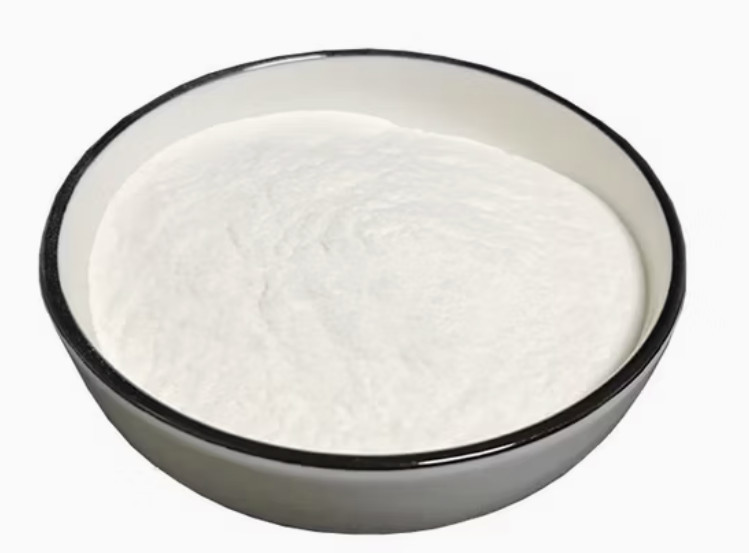
Molar mass
≈ 153.33 g/mol
Appearance
white to grey lumps or powder
Assay (as BaO)
≥ 98–99% (grade‑dependent)
Reactivity
exothermic with water → Ba(OH)₂; absorbs CO₂
Solubility
reacts in water; soluble in acids
Danger: corrosive, toxic soluble barium can form. Avoid skin/eye
contact and moisture. Use appropriate PPE and engineering
controls; consult SDS before handling.
| Parameter | Typical | Spec |
|---|---|---|
| Assay (as BaO) | ≥ 99.2% | ≥ 99.0% |
| Carbonate (as BaCO₃) | ≤ 0.5% | ≤ 1.0% |
| Moisture (LOD) | ≤ 0.3% | ≤ 0.5% |
| Iron (Fe) | ≤ 30 ppm | ≤ 50 ppm |
| Insolubles | ≤ 0.05% | ≤ 0.10% |
| Appearance | white powder | conforms |
| Parameter | Typical | Spec |
|---|---|---|
| Assay (as BaO) | ≥ 98.5% | ≥ 98.0% |
| Iron (Fe) | ≤ 20 ppm | ≤ 30 ppm |
| Sodium (Na) | ≤ 150 ppm | ≤ 200 ppm |
| Particle size | powder, d90 ≈ 150 µm | as ordered |
| Appearance | white to grey powder | conforms |
| Parameter | Typical | Spec |
|---|---|---|
| Form | granular / lumps | as ordered |
| Assay (as BaO) | ≥ 98% | ≥ 97% |
| Carbonate (BaCO₃) | ≤ 1.0% | ≤ 2.0% |
| Screen size | 5–25 mm | per order |
| Appearance | greyish lumps | conforms |
| Applications | Guidance | Pairings |
|---|---|---|
| Glass & ceramics | Improves refractive index/chemical durability; control Fe/Na impurities | With SiO₂, B₂O₃, Al₂O₃; maintain dry feed |
| Reagent / strong base | Use as drying agent/CO₂ scavenger only in controlled systems | Closed, dry vessels; monitor conversion to Ba(OH)₂/BaCO₃ |
| Catalyst/support | Alkaline promoter in specialty syntheses | Combine with transition‑metal catalysts as specified |
| Hazards | Controls | First Aid / Response |
|---|---|---|
| Corrosive; reacts with water generating heat and Ba(OH)₂. Toxic soluble barium salts may form. | Dry handling only; local exhaust; chemical‑resistant gloves, goggles/face shield, lab coat; avoid moisture/CO₂. | Skin/eye contact: rinse with water for ≥15 min, remove contaminated clothing. Ingestion/inhalation: seek medical attention. Refer to SDS. |
| Incompatible with acids, water, halogenated solvents. | Store tightly closed with desiccant in cool, dry area; segregate from acids and oxidizers. | Spills: sweep dry; do not add water; place in dry container for disposal per local rules. |
| Packaging | Storage & Handling | Regulatory/Transport |
|---|---|---|
|
• 25 kg steel drum (poly liner, moisture barrier) • 25 kg
fiber drum (foil‑lined) • 1 kg amber glass for lab use.
• Granular/lump grades in reinforced pails/drums on request. |
• Moisture‑reactive. Store dry, tightly sealed with
desiccant; protect from humidity and CO₂.
• Open/dispense in dry room; avoid water contact. Use dedicated tools; consult SDS for handling/first aid. |
• Typically classified as hazardous for transport/OSHA‑GHS. Exact class/UN may vary by region and packing—verify locally. SDS/COA per lot. |
Specs are representative; shipped material conforms to the COA for
the lot. Validate suitability under your process and regulatory
requirements before use.